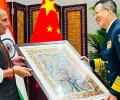
Defence Minister Rajnath Singh, in his meeting with Chinese counterpart Dong Jun in Qingdao on June 26, proposed that India and China should solve the "complex issues" under a structured roadmap comprising steps to de-escalate tensions along the frontiers and rejuvenate the existing mechanism to demarcate the borders.

Scientists are examining how a possible glacial collapse and ice-rock avalanche may have triggered the devastating flash floods along Nepal's Bhote Koshi River, with preliminary assessments indicating that debris may have temporarily blocked the Lhende River and created a landslide dam that subsequently gave way.

India has highlighted 13 key outcomes from the recent Shanghai Cooperation Organisation (SCO) summit, focusing on enhanced cooperation in security, counter-terrorism, and addressing transnational threats. These outcomes include the establishment of a Universal Centre for Countering Challenges and Threats to Security, a strong stance against state-sponsored terrorism, and agreements on narcotics control, climate change, and artificial intelligence, reinforcing India's engagement in the Eurasian region.

India and Australia have signed significant agreements covering civil nuclear energy, maritime security, and critical minerals, reinforcing their partnership's role in ensuring a peaceful Indo-Pacific. The pacts facilitate uranium supply from Australia to India and enhance cooperation in defence, cyber, and critical technologies.

The death toll from flash floods in central Nepal has surged to 734, with nearly 2,500 people still missing. India has intensified its rescue and relief efforts, sending additional aid, technical teams, and forensic experts, while also working to locate and rescue over 275 missing Indian nationals.

Prime Minister Narendra Modi, addressing the SCO summit in Bishkek, called for a united front against terrorism and its financing, rejecting double standards. He emphasised resolving conflicts through dialogue and diplomacy, not battlefields. Modi also highlighted that connectivity projects must respect national sovereignty and territorial integrity, a veiled reference to China's Belt and Road Initiative. India's vision for SCO rests on security, connectivity, and opportunity.

India and China held talks in New Delhi to discuss the lessons learned from the eastern Ladakh military standoff and prevent its recurrence. The two sides also prepared for the next meeting of the Special Representatives on the boundary question. The talks took place under the framework of the Working Mechanism for Consultation and Coordination on India-China Border Affairs (WMCC). Both sides highlighted the importance of regular exchanges and contacts at diplomatic and military level to maintain peace and tranquility in the border areas.

A massive flash flood originating in Tibet has devastated central Nepal, killing 17 people and leaving nearly 500 missing, including 105 Indians. The deluge, caused by a rock slide near the Nepal-Tibet border, swept through districts, washing away bridges and severely damaging at least a dozen hydropower projects.

India and China will resume direct flight services by the end of this month after a five-year gap, signaling an effort to rebuild ties strained by the border standoff in eastern Ladakh.

Devastating flash floods in Nepal, triggered by an ice and rock collapse, have led to over 900 deaths and 4,000 missing. Rescue operations by security personnel are severely hampered by critical shortages of specialised equipment, including thermal cameras, body bags, ropes, and helicopters. International assistance from India and China is aiding the search for missing workers, highlighting Nepal's long-standing disaster management capacity issues and inadequate funding.

The captain of the Pakistani naval ship was overconfident, reckless and professionally incompetent. He displayed false bravado and by his actions would have caused grievous injuries to his men onboard and severely damaged the ship. On the other hand the captain of INS Kolkata maintained his cool, composure, displayed excellent seamanship skills and maintained his course and speed to avoid a major catastrophe. Comparison of the two captains shows the levels in professional competence of the two navies which are miles apart, points out Commodore Venugopal Menon (retd).

If Indian strategists think that the 60 billion dollars bilateral trade with China is an insurance against a Chinese surge along the borders, they are mistaken.
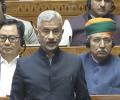
Jaishankar said India-China ties have been abnormal since 2020 when peace and tranquillity in border areas were disturbed due to Chinese actions.

'After the Galwan clash, the rules of engagement changed with the army commanders allowed to use any means at their disposal as they deem fit for tactical operations.'

This might lead to a further outburst, flooding downstream if left unchecked.

Devastating flash floods in Nepal's Bhote Koshi River, triggered by a glacier or ice rock collapse, have resulted in 175 recovered bodies and hundreds missing, including tourists. India has promptly responded by providing 10 tons of humanitarian aid and medical supplies, with Prime Minister Narendra Modi conveying condolences and assuring full support to Nepal.
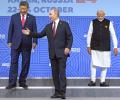
Russian Foreign Minister Sergey Lavrov alleged that NATO is blatantly trying to lure India into anti-China intrigues.

Foreign Secretary Vikram Misri on Monday called on Chinese Foreign Minister Wang Yi and discussed issues of bilateral interest.

Phunchuk Stobdan's forte was candour and strong views on India's defence. Naturally, India's adversaries were in awe of him, fearing his views and unyielding stand on boundary issues, remembers Tarun Vijay.

The former Army Chief said India's relations with China will always remain "somewhat tense".


'The potential of one such LAC engagement going out of control and leading to heavy casualties cannot be ruled out,' warns Lieutenant General Syed Ata Hasnain (retd).

Indian Ambassador to China Nirupama Rao and her Chinese counterpart in India, San Yu Si, are among the 19 delegates who will assist the special representatives in the talks.

China has been taking "incremental and tactical actions" to press its claims at the Line of Actual Control (LAC) with India and has unsuccessfully sought to prevent New Delhi from deepening its relationship with the US during and subsequent to the standoff, the Pentagon has said in a major report on China's military modernisation.

Vikram Doraiswami, a seasoned diplomat, has been appointed as India's new ambassador to China, succeeding Pradeep Kumar Rawat. This decision comes as both countries attempt to improve bilateral relations following a period of strain.

India and China on Monday decided to resume the Kailash Mansarovar Yatra as the two sides agreed to take certain people-centric steps to 'stabilise and rebuild' ties.

The Bloomberg report suggests that this backchannel communication from President Xi has laid the groundwork for a broader thaw in relations. This overture has since translated into a series of tangible diplomatic actions leading up to the upcoming Shanghai Cooperation Organisation (SCO) summit.

To get its act going in Myanmar, India would need very dynamic diplomacy and not the lazy all-eggs-in-one-basket approach, points out Subir Bhaumik.

India and China have agreed to work towards a "roadmap" for rebuilding mutual trust following the border standoff in eastern Ladakh, according to a statement from the Indian Defence Ministry. Defence Minister Rajnath Singh met with his Chinese counterpart Dong Jun in Vientiane, Laos, on the sidelines of a regional security conclave. Singh called for drawing lessons from the "unfortunate border clashes" of 2020 and emphasized the need for cooperation rather than conflict. Both sides agreed to work towards a roadmap for rebuilding mutual trust and understanding, and a meeting of the Special Representatives and Secretary-Vice Minister mechanism will also take place soon.

The US president's remarks in this regard come days after senior Indian and Chinese military commanders held talks aimed at resolving the months-long standoff along the Line of Actual Control in Ladakh. The two countries agreed to stop sending more troops to their disputed border in the Himalayas.

'The flip side of this is that he won't hesitate to call out India if he thinks its policies are hurting US economic interests or border US foreign policy goals.'
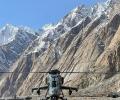
Defence sources stated that the disengagement involves removing infrastructure and withdrawing troops from both sides. The process is expected to be completed by Tuesday.

Union Home Minister Amit Shah will visit Arunachal Pradesh on April 10 and 11 where he will launch the 'Vibrant Villages Programme' in Kibithoo, a village along the India-China border.
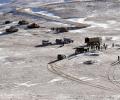
The Indian and Chinese troops are locked in an over three-year confrontation in certain friction points in eastern Ladakh even as the two sides completed disengagement from several areas following extensive diplomatic and military talks.

As China frowned on Dalai Lama's visit to Tawang in Arunachal Pradesh, India on Monday said border differences between the two countries could be resolved through dialogue.

China and Bhutan held the 15th Expert Group Meeting to discuss boundary alignment, focusing on areas where there are no disputes, and agreed to maintain the momentum of negotiations.

The devastating flash floods wreaked havoc across Nepal, with the ministry of external affairs on Thursday stating that 84 Indian nationals have been rescued while 290 remain uncontactable as the Himalayan nation stepped up search, rescue and relief operations following the disaster that has claimed more than 390 lives.
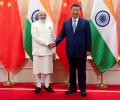
Chinese President Xi Jinping described India and China as "good neighbours, friends and partners", saying that achieving "dragon and elephant dancing together" is the right choice for both countries.

A six-kilometre-long tunnel will be constructed between Bundi and Garbiyang on the Ghatiabagar-Lipulekh road in Uttarakhand to make the way to the last border post of the Lipulekh pass on the India-China border smoother, a senior BRO official said on Tuesday.

The boundary mess between India and Nepal needs a solution in a manner as mentioned by Nepal's Foreign Minister Shishir Khanal: 'On evidence not emotions', counsels Lieutenant General Shakti Gurung (retd).
